
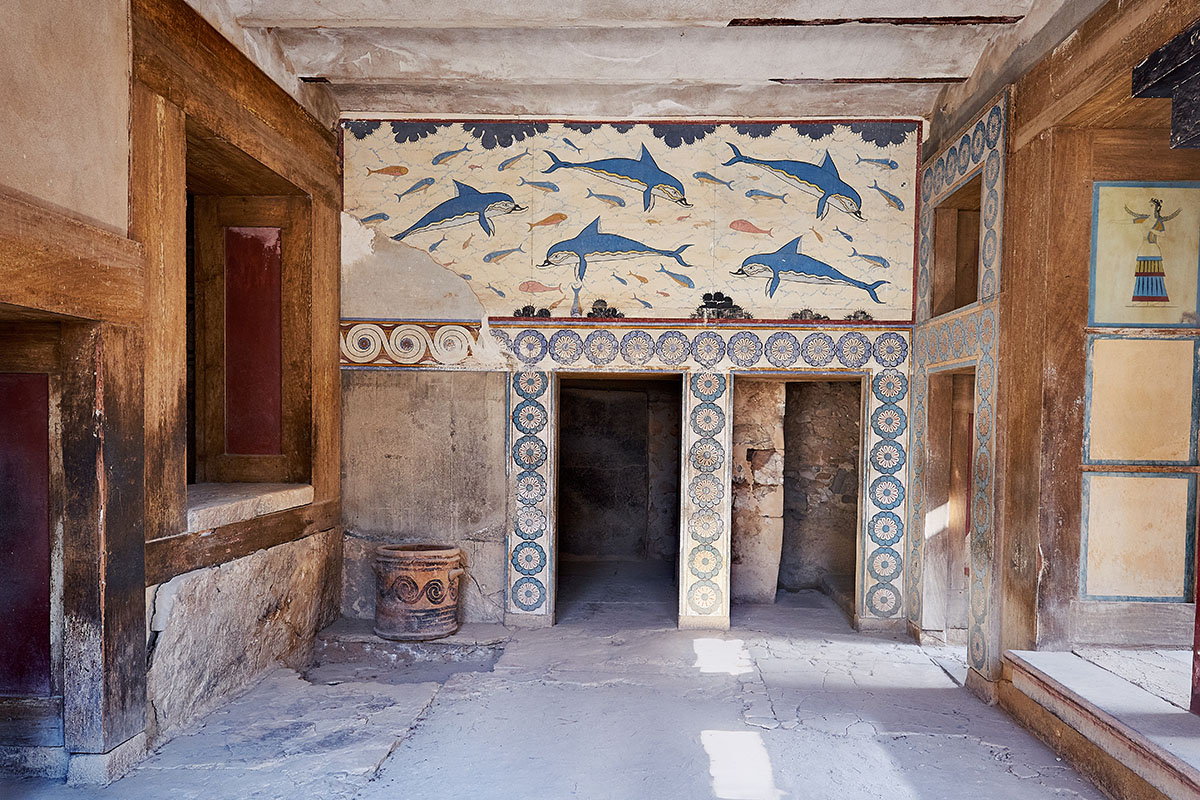
While most come for the light and the water, the real soul of the Greek islands lies in the endurance of their marble and the stories help within their fortress walls. These are the open-air archives of Western Civilization, preserving a legacy that spans millennia. You’ll find the legendary birthplaces of Gods in the Cyclades and the grim, imposing bastions of the Dodecanese. A concentration of heritage that remains unrivaled on the world stage.
If you are looking for the best Greek islands for sightseeing, the UNESCO World Heritage list provides the ultimate roadmap. These 10 sites represent outstanding universal value, yet each remains a living, breathing part of the Greek landscape, accessible to anyone willing to step off the beaten path.
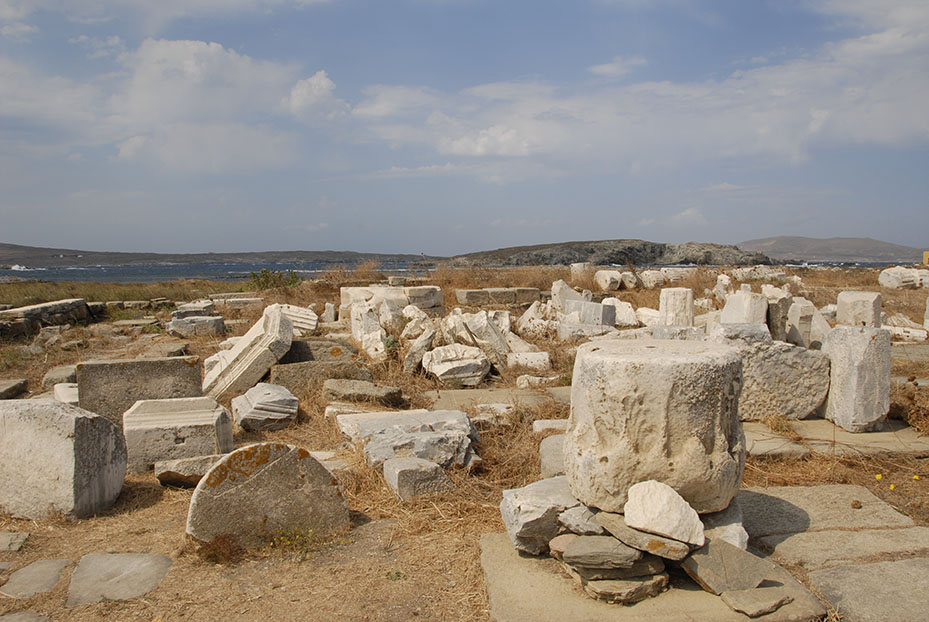
1. The Sacred Island of Delos (Cyclades)
Floating in the heart of the Cyclades, just a short boat ride from Mykonos, lies Delos. In antiquity, this was the most sacred spot in the Greek world – the legendary birthplace of Apollo and Artemis. Today, the entire island is an archaeological site. Walking through the Terrace of the Lions or standing in the Ancient Theater, you realize that Delos was once a thriving port. It remains one of the best Greek islands for history enthusiasts because the ruins are the remains of an entire, complex city .
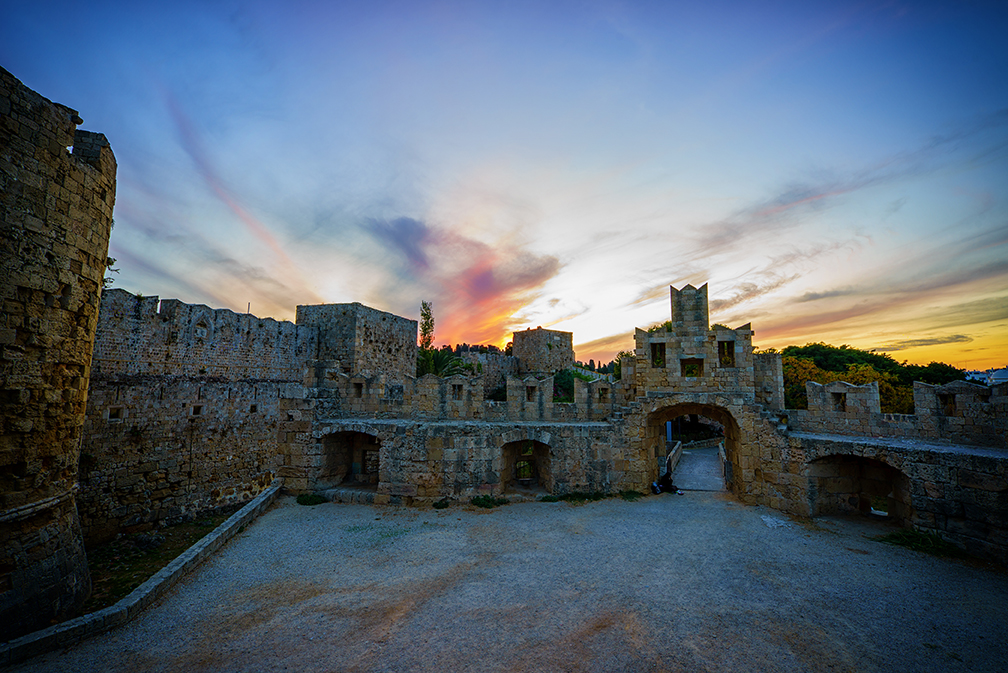
2. The Medieval City of Rhodes (Dodecanese)
When you step through the gates of the Old Town in Rhodes, the modern world vanishes. This is one of the best-preserved medieval cities in Europe. Built by the Order of St. John of Jerusalem, its massive walls, the Street of the Knights, and the Palace of the Grand Master tell a story of Crusader Knights, Ottoman sieges and Italian heritage. It is a labyrinth of cobblestones where people still reside and work within these 14th-century walls.
Plan your trip: The journey to the Dodecanese is as legendary as the destination. Book your ferry tickets to Rhodes and arrive by sea, just as the Knights did centuries ago.
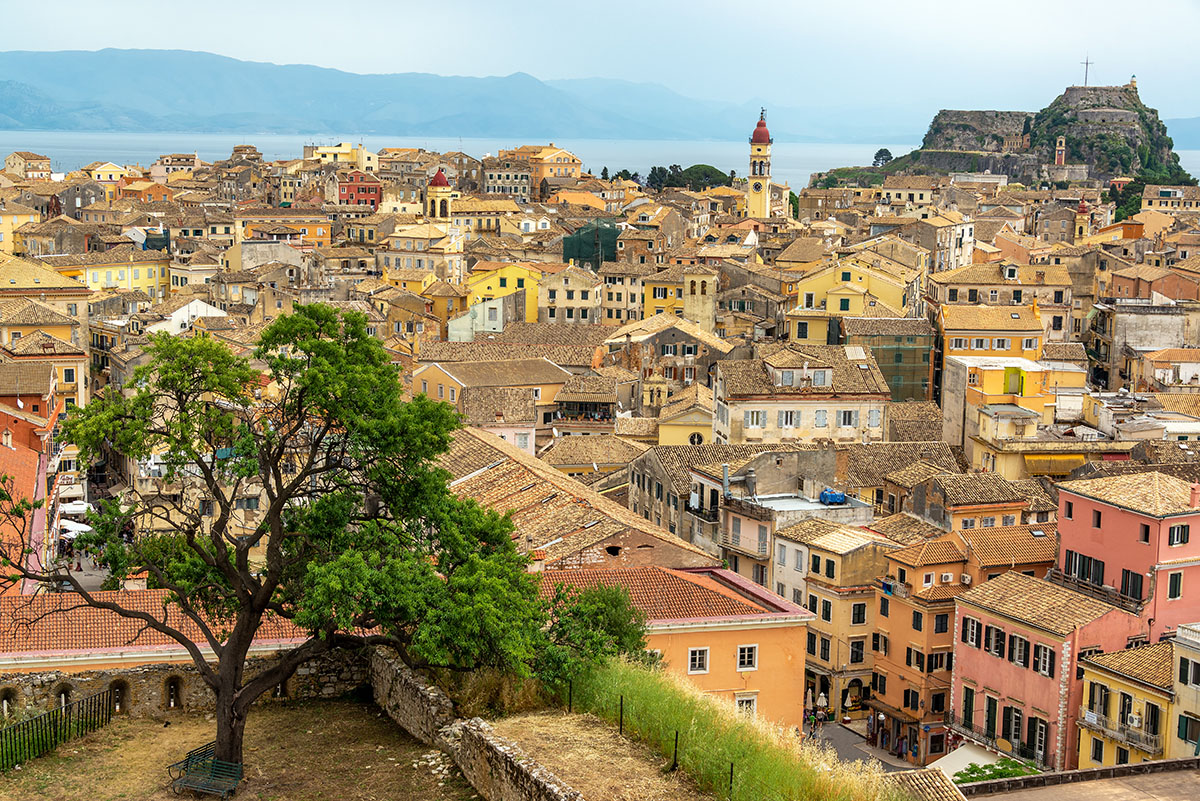
3. The Old Town of Corfu (Ionian)
Instead of the usual whitewashed houses you see in the Cyclades, Corfu’s architecture is rooted in Venetian and European influences. Its UNESCO-listed Old Town is a masterpiece of defense and neoclassical elegance. Anchored between 2 massive fortresses, the town’s narrow Kantounia (alleys) reflect 4 centuries of Venetian rule, alongside French and British influences. It is an essential stop for anyone seeking the best Greek islands for sightseeing with a distinct character that feels deeply connected to the Mediterranean’s broader history.
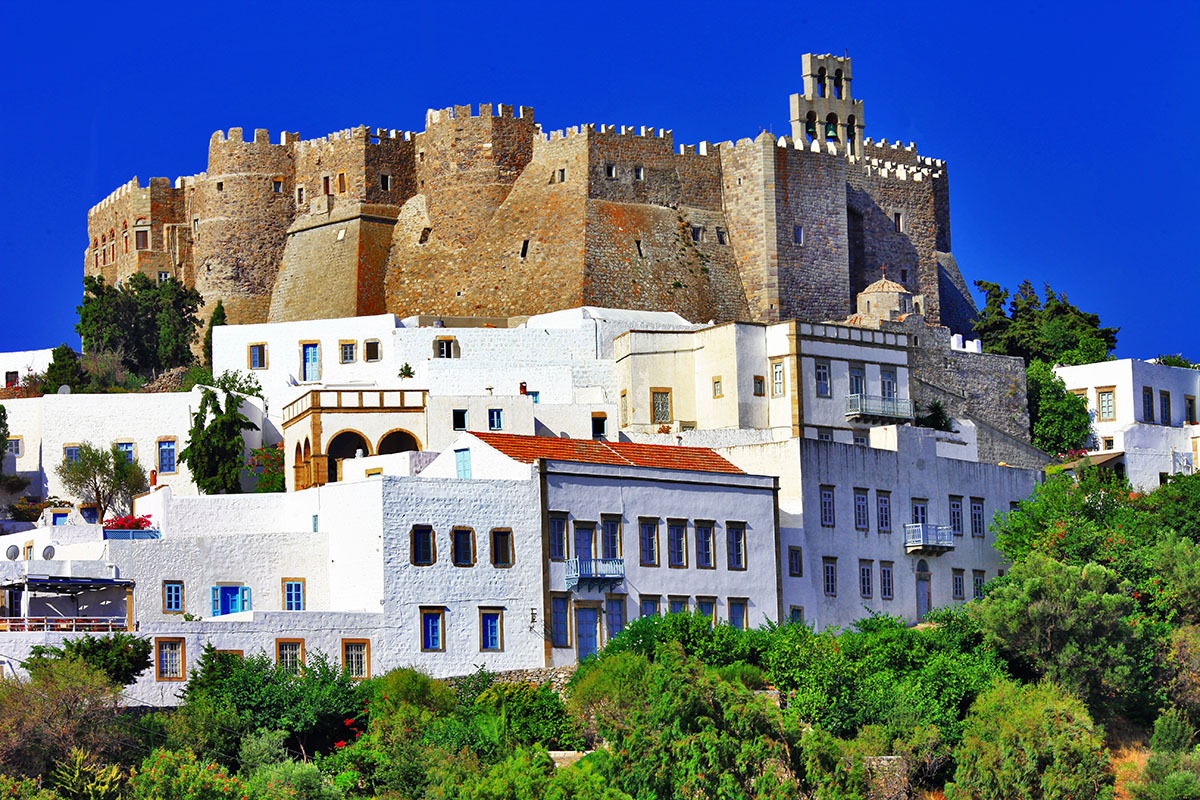
4. The Monastery of Saint John and the Cave of the Apocalypse in Patmos (Dodecanese)
Patmos is defined by its verticality and its silence. At the summit of the whitewashed Chora sits the fortress-monastery of Saint John the Theologian, founded in 1088. Its dark stone battlements dominate the skyline, a rare bridge between the ancient world and the Byzantine era. Halfway down the hill lies the Cave of the Apocalypse, where tradition holds that St. John wrote the Book of Revelation. Together, these sites offer a profound sense of spiritual and architectural gravity that is felt the moment you begin the climb from the Port of Skala.
5. Pythagoreion and Heraion of Samos (North Aegean)
Samos was a maritime powerhouse in the 6th century BC. The Pythagoreion, the ancient fortified port, and the Heraion – the massive temple dedicated to Hera – showcase the sheer scale of ancient Greek engineering. The Eupalinian Aqueduct, a tunnel curved through a mountain, remains a testament to the scientific mind of Ancient Samos. For those mapping out the best Greek islands for history, Samos offers a unique look at the dawn of the Classical Age and the birthplace of Pythagoras itself.
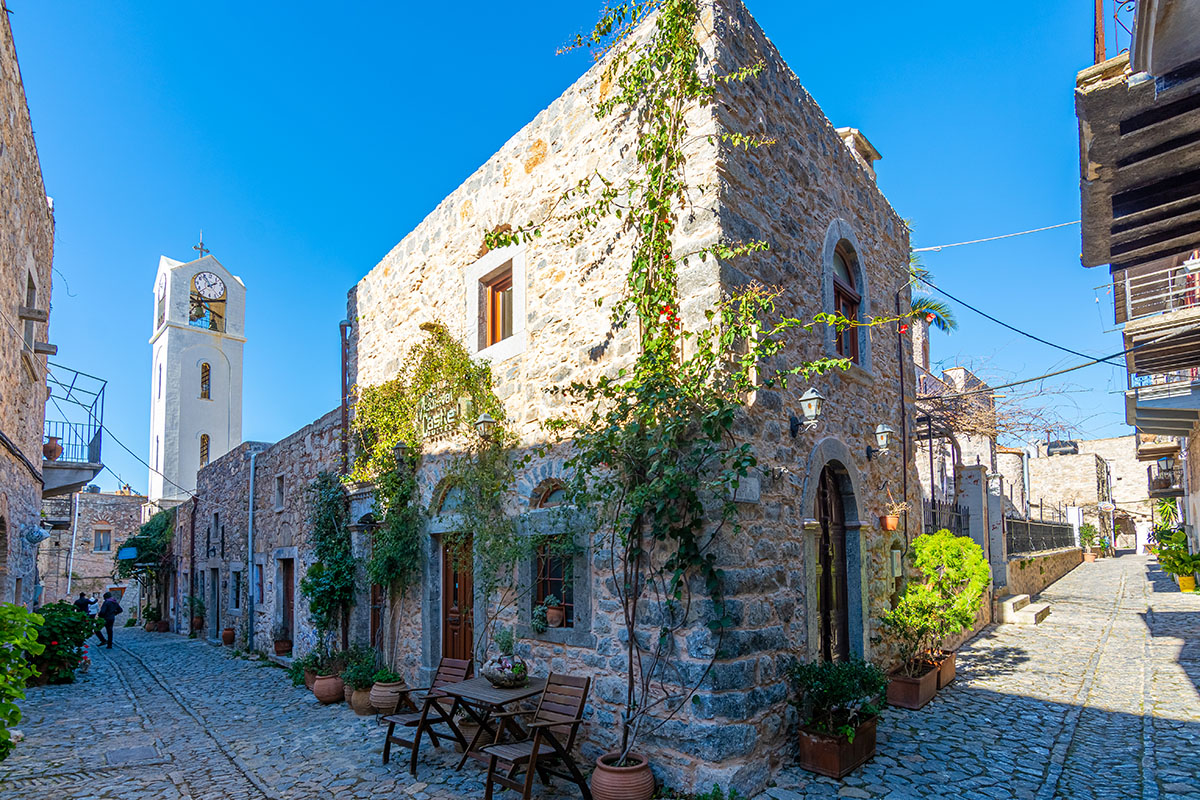
6. Nea Moni of Chios (North Aegean)
Hidden in the pine-covered mountain of Chios, Nea Moni is an 11th century monastery famous for its mosaics. These are among the finest examples of the Macedonian Renaissance in Byzantine art. The gold-ground mosaics are masterpieces of light and color that have survived earthquakes and wars, preserving the imperial grandeur of Constantinople in the middle of the Aegean.
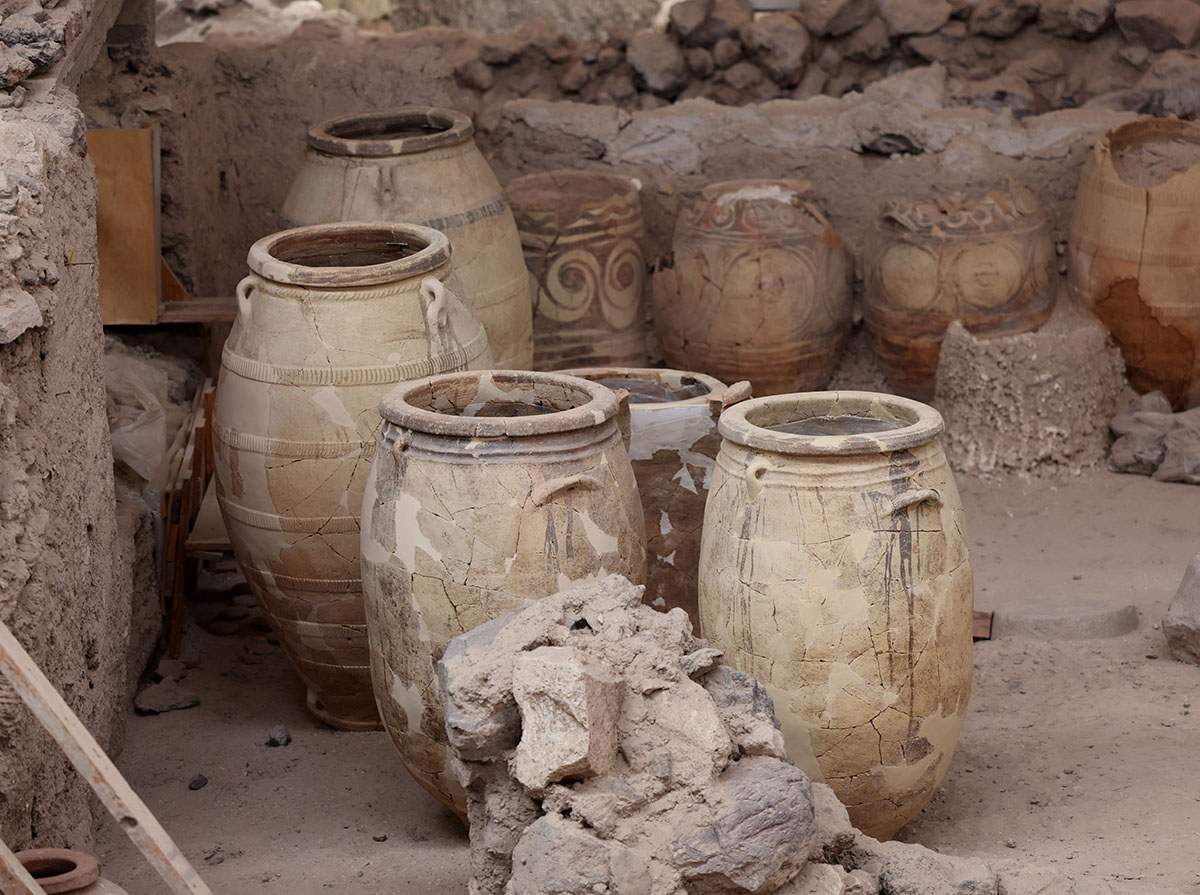
7. The Archaeological Site of Akrotiri in Santorini (Cyclades)
While Santorini is world-famous for its Caldera views, the prehistoric settlement of Akrotiri – often called the Pompeii of the Aegean – is where its true historical heart beats. Preserved under volcanic ash for millennia, the sophisticated multi-story houses, drainage systems and frescoes offer a window into a civilization that vanished in a single eruption. It is a hauntingly preserved snapshot of Bronze Age life that predates the classical ruins found elsewhere.
Stay in the heart of history: want to wake up overlooking the Caldera? Find and book the best accommodation in Santorini through Travel Ferry to pair your historical exploration with world-class hospitality.
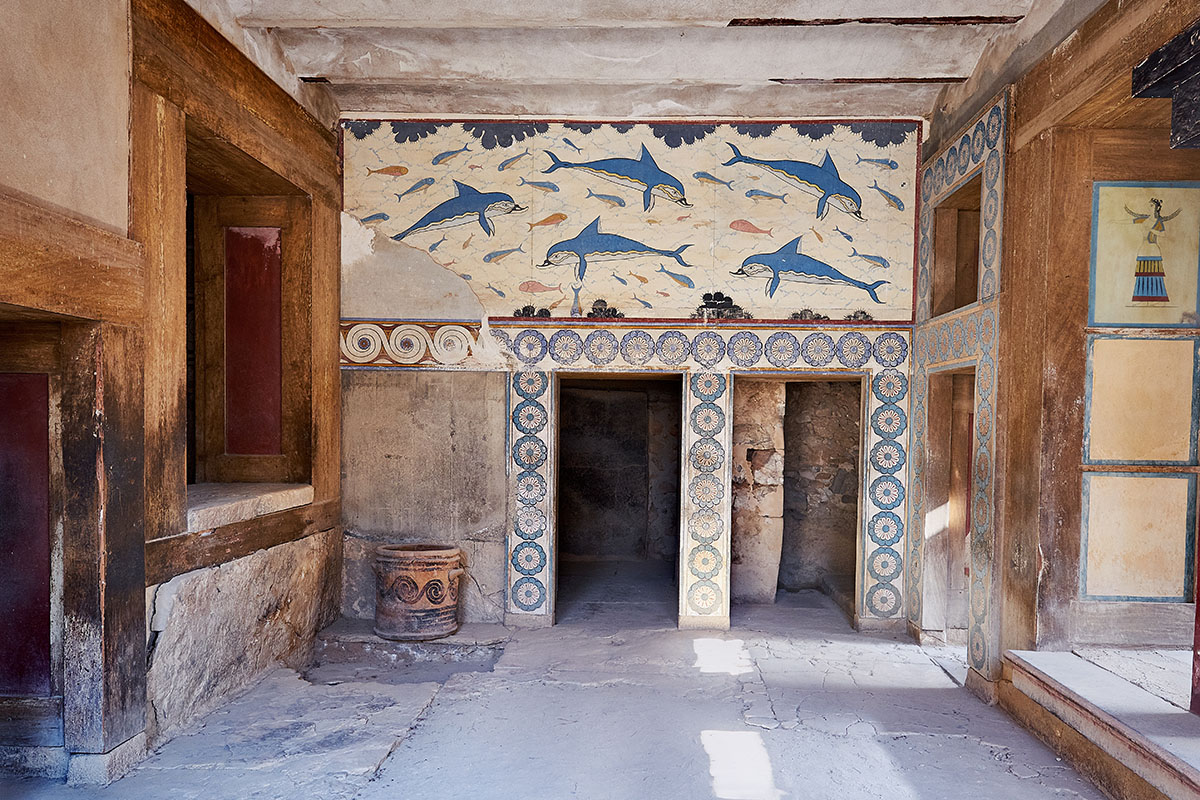
8. The Venetian Fortifications of Heraklion (Crete)
Crete is the cradle of the Minoan Civilization. While the Palace of Knossos is the headline act, the Venetian Walls and the Koules Fortress in Heraklion represent a later, equally vital chapter of Aegean History. These massive sea-facing defences protected the island for centuries against the Ottoman Empire. Crete’s scale makes it one of the best Greek islands for sightseeing, where you can jump from Bronze Age palaces to Venetian shipyards in a single afternoon.
9. The Castle of Chios (North Aegean)
The Castle of Chios has been continuously inhabited since the Byzantine period. Its walls enclose a living community where Genoese and Ottoman architectural elements blend seamlessly. Walking its perimeter at sunset offers one of the most evocative views in the North Aegean, bridging the gap between the Greek mainland and the East. It is a site that remains a functional and vibrant part of the island’s pulse.
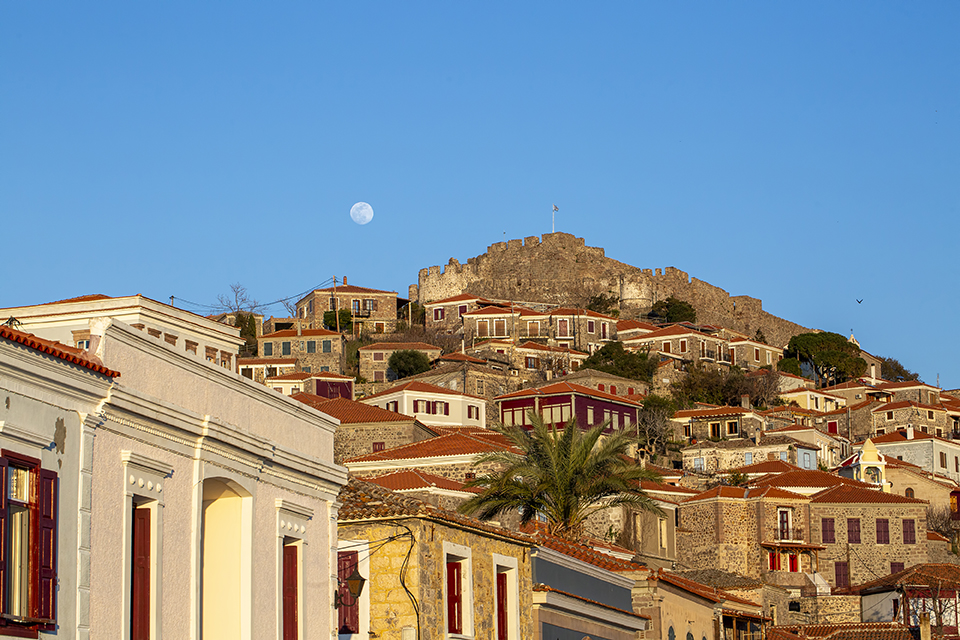
10. The Medieval Fortress of Mytilene (North Aegean)
The Castle of Mytilene is one of the largest and most imposing fortifications in the Mediterranean. Built on the site of an ancient acropolis, its current form reflects centuries of Byzantine, Genoese and Ottoman reconstruction. The subterranean crypts and the massive Byzantine gate are highlights that offer a raw, unpolished look at the military history of the North Aegean. For those searching for the best island for history, Lesvos provides a scale of heritage that feels vast and untamed compared to the smaller islands.
Navigating the Islands of History
Exploring these sites requires more than a guidebook. The best way to experience Greek heritage is to travel as the ancients did – by sea. The best Greek islands for history are often connected by regional ferry routes that allow you to move through the centuries at your own pace. The time spent on the deck of the ferry, watching the islands appear on the horizon, is the perfect transition between these different eras.
Check ferry scheduled to all islands and book your tickets today on Travel Ferry. Looking for a place to stay? Browse our curated accommodation and book now!